
Client: Docker
Timeline: March - May 2025
Roles: Lead Product Designer
Prototypes: Docker Hardened Images
Before I dive in, a little context: this project marked the moment Docker began redefining what security meant for its products. It started as a fast-moving, startup-like effort that pulled a small group together to figure things out in real time, and I was right in the middle of it.
It was fast, messy, and exciting, like building the plane while flying it. With new leadership in place, Docker formed the Supply Chain Security (SCS) group to focus on security with clear goals and urgency. Our first project, Docker Hardened Images (DHI), was created to help companies trust the software they use by offering secure, verified container images that are always kept up to date.
We had four months to build an entirely new product and shipped it in two, making it the most successful product launch in Docker’s history and a key moment in its shift toward enterprise security.
In just a few months, DHI made a measurable impact: 1.57M image pulls, $1M+ in closed ARR, and 138 active organizations using the product. The catalog saw 3,000+ daily views with a 30% conversion rate from views to pulls, proving that the experience scaled and delivered real value.
Adoption metrics showed how quickly it caught on: 275 organizations gained access, nearly half mirrored or pulled images, and the catalog grew from 24 to 136 repositories between March and October. DHI set Docker on its path toward becoming a company known for security, showing that thoughtful design can drive both trust and business results.
Companies were downloading software from all over the internet, and no one could say for sure which versions were safe. Security and platform teams spent countless hours fixing bugs, double-checking security requirements, and creating their own lists of trusted software, costing them hundreds of hours each month and hundreds of thousands of dollars a year.
Docker was already where developers found software, but not where enterprises went for secure versions. Our challenge was to make Docker a trusted source for verified, up-to-date software while keeping the experience simple.
I didn’t have a background in security, so I started by looking at what competitors like Chainguard and RapidFort were doing. From there, I mapped out what Docker’s user journeys could look like and created early, rough design sketches to start the conversation.
This phase was about turning rough ideas into a clear plan. I wanted it to feel collaborative and quick. We started with a few focused brainstorms that led directly to the designs shaping the Early Access Program.
The first version of the team felt like a small startup, still figuring out its roadmap and priorities. With no clear direction but a need to move fast, I kicked things off with a Hot-Potato brainstorm around one question: What should the Overview page include, and how do we support first-time users versus returning users when both have purchased?

After that, I worked with a smaller group to refine the top ideas from that session. We used screenshots from Docker Hub and mapped where new functionality could fit into the existing layout. It helped us visualize how new ideas would work within the product and where updates were needed.
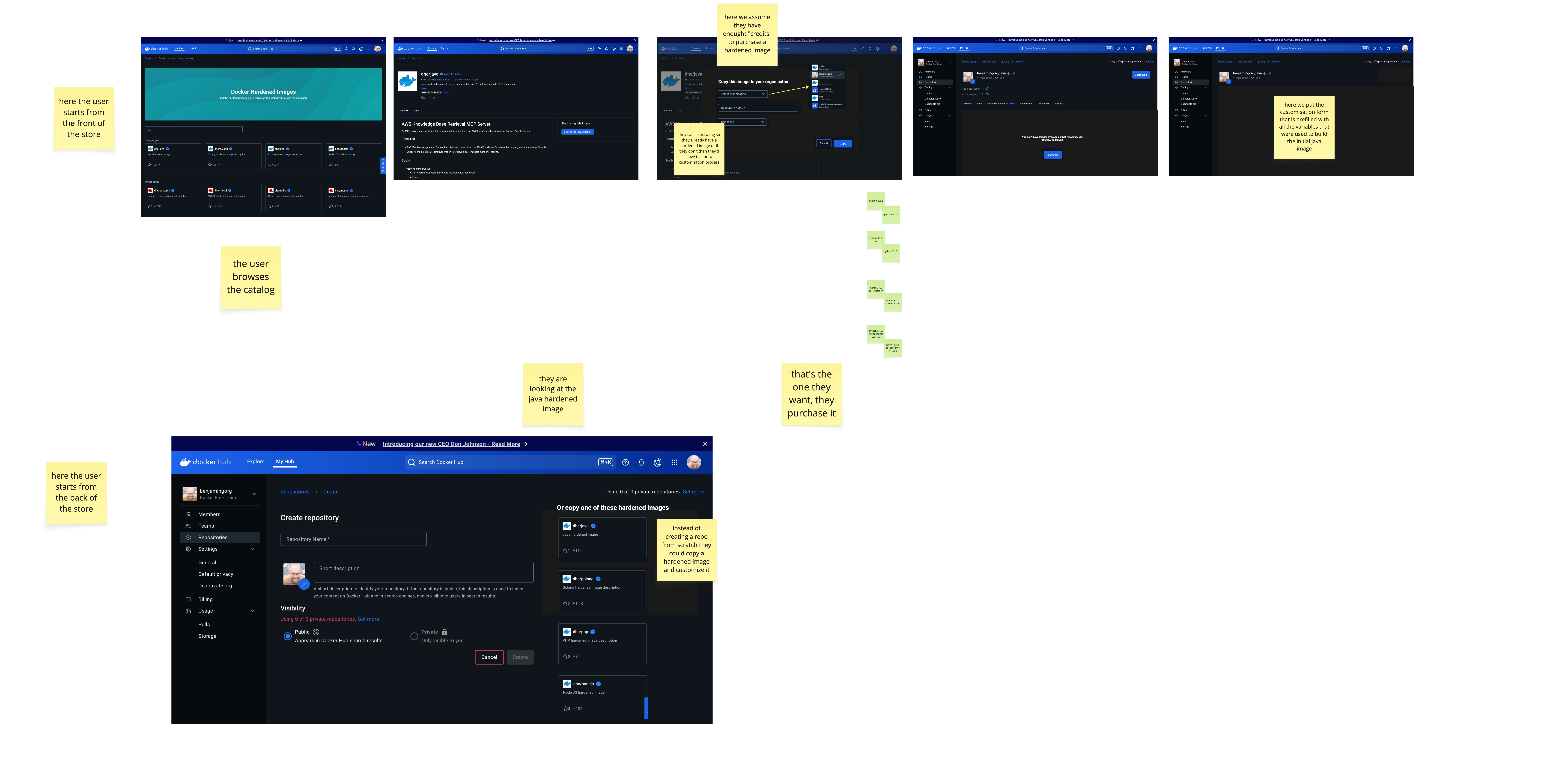
With that clarity, I mapped the different user journeys, which helped my PM and me outline a rough plan for Milestone 1 and beyond—the foundation for the EAP for DHI.
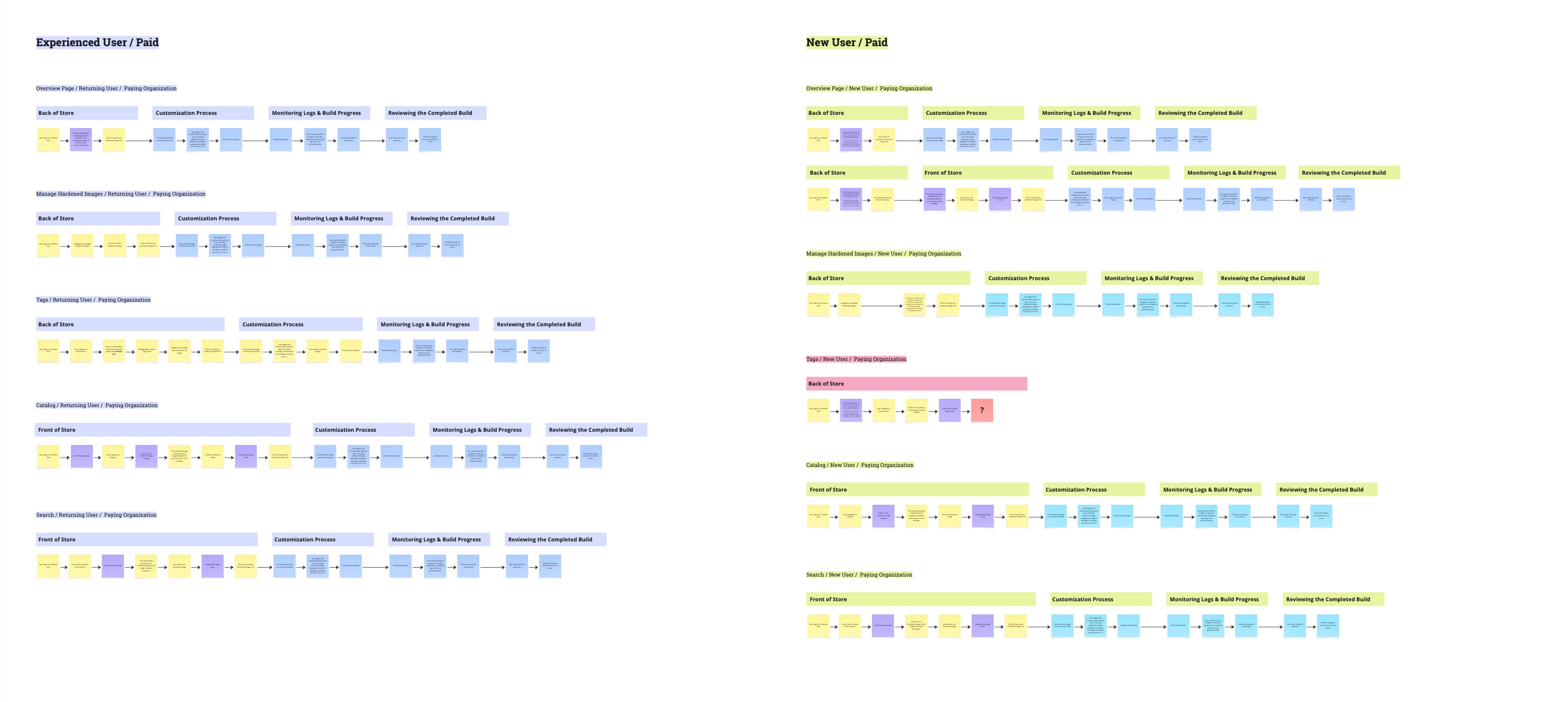
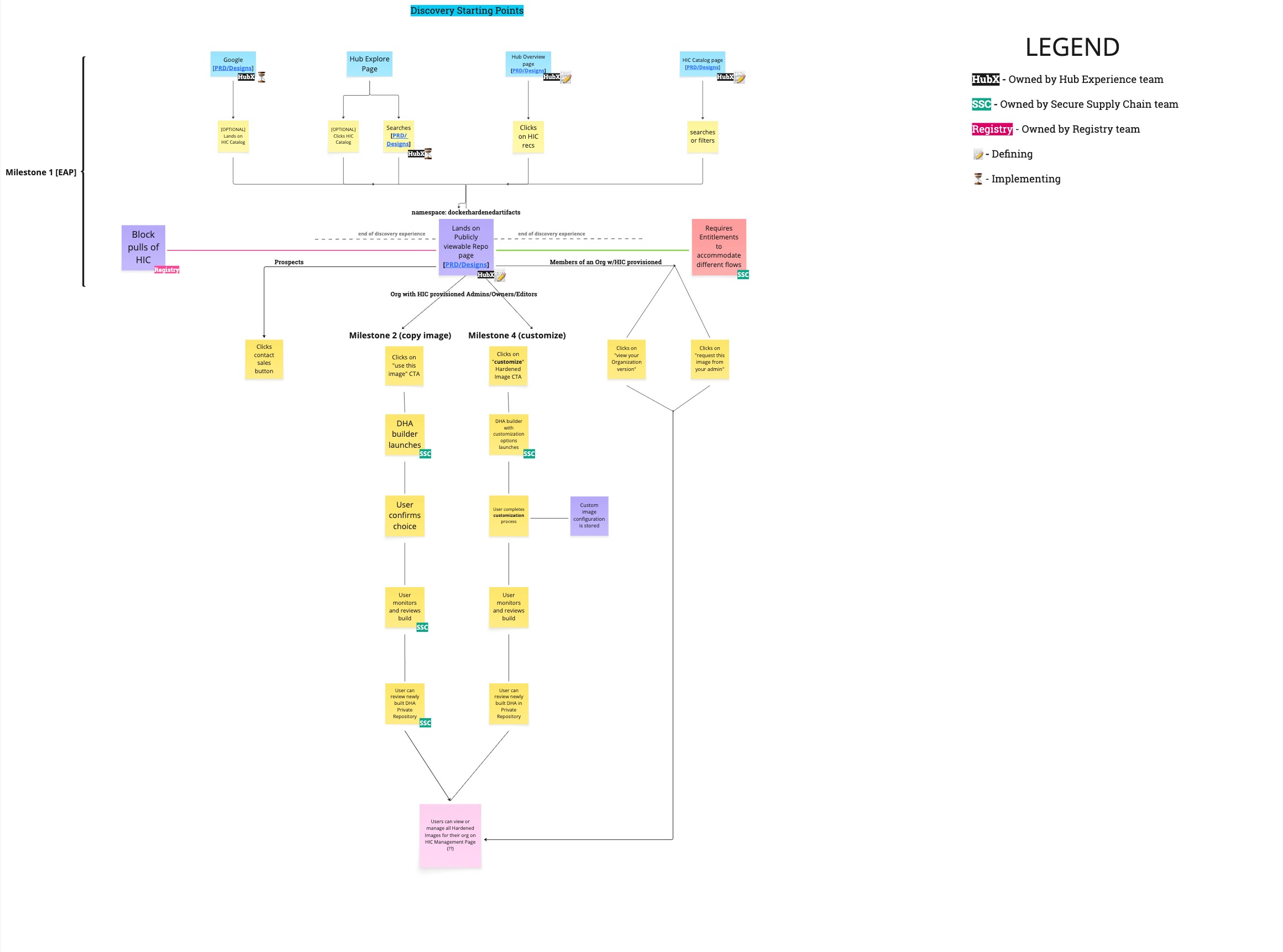
Our goal was to launch with a private catalog on Docker Hub, available to selected users who could browse and mirror secure images into their own workspaces. Mirroring introduced a brand-new capability for Docker. Before this, users only downloaded images from Hub; now they could copy and manage them in their own environments. Early on, everything was done manually, so it was critical to design an experience that felt smooth and easy to understand.
Once I had enough direction, I started mocking out real ideas and gathering feedback. It wasn’t always easy, especially with such a busy engineering team, but it pushed me to adapt and stay flexible. Around this time, I also partnered with our UXR team to collect feedback throughout the EAP, running sessions and check-ins as users tested and adopted the product.
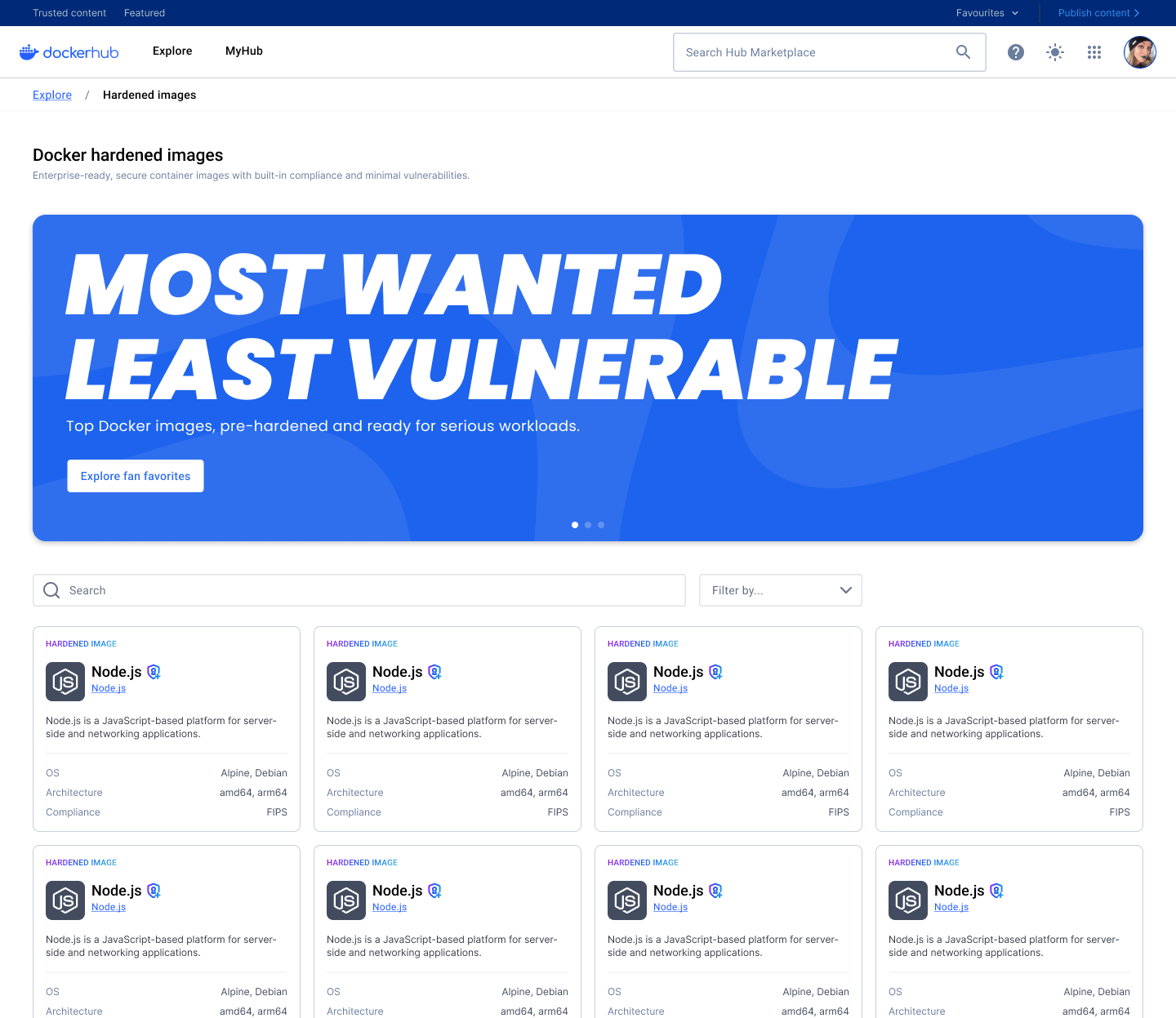
To keep everyone aligned, I started a weekly design review that brought together design, product, and engineering. It began with five people and grew to over forty, becoming the main space for shared visibility, feedback, and decision-making.
Looking back, this project pushed me to grow as a designer. It reminded me how important it is to find clarity in chaos, stay curious, and create alignment through design conversations.
This project showed me how much design can bring clarity to an uncertain space. We were a small team figuring things out as we went, and we delivered faster and better than anyone expected.
What I’m most proud of isn’t just the numbers but how design helped unite a brand-new organization. The weekly design review started as a way to share work and turned into the heartbeat of collaboration.
Even after moving on to help launch Secure Policies, this project remains one of my proudest moments—both for what we built and how we built it.